
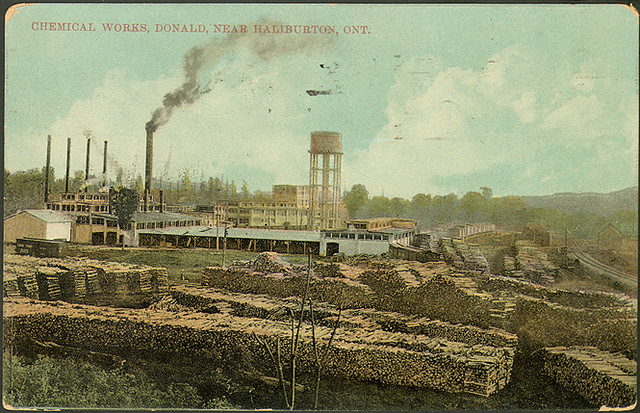
Richard Donald, after whom the town of Donald, Ontario was named, commissioned the construction of the Donald Chemical plant. It was built in 1908 by Westinghouse Engineering at a cost of $1 million. Referred to as "The Chemical" by local residents, the plant manufactured wood alcohol, acetate of lime, as well as charcoal and other by-products using local timber.
The ruins are the only "in-tact" remnants of the Standard Chemical Company in Canada.
A University of Michigan journal article titled 'Cement Age' from January 1909 described the architectural uniqueness of the plant, which was comprised of four buildings: oven house, still house, charcoal house and boiler house, as well as the first concrete raised water tower in North America, which held 50,000 gallons. These were the first buildings in Canada to use chain reinforcement for roofing.
In 1915, The Standard Chemical Company took over the plant, which was facing financial hardships under the ownership of Wood Chemical, which had previously purchased the plant for $1. Standard Chemical ceased operations 31 years later, in 1946, when a large scale fire decimated an already dwindling supply of local maple trees. Several of the plants buildings were destroyed at this time, as well as the post office and houses that once lined the adjacent rail bed.
On this cloudy day in late August, 65 years after the closure of Standard Chemical, we briskly pass by the NO TRESPASSING signs and enter the old ruins. Just behind us, a large purple ball bounces down the road, passing us by like a fleeting moment in time.
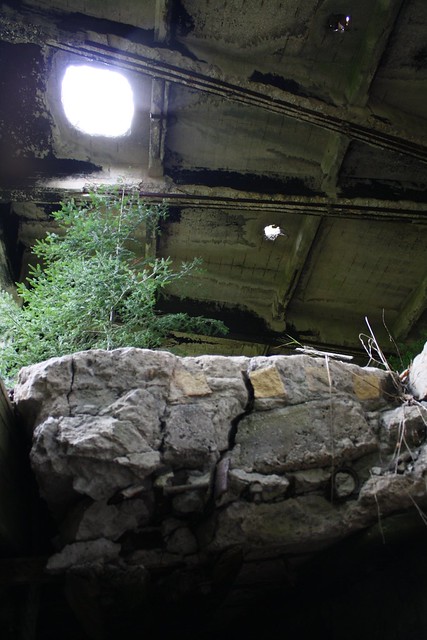
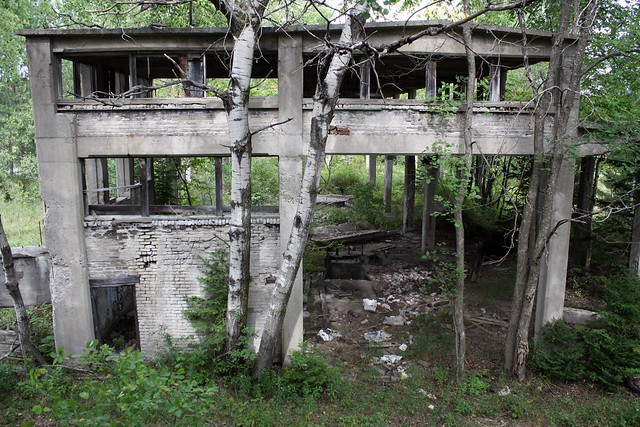
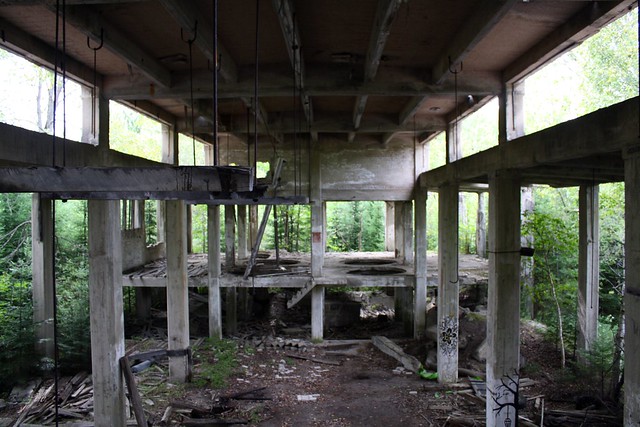
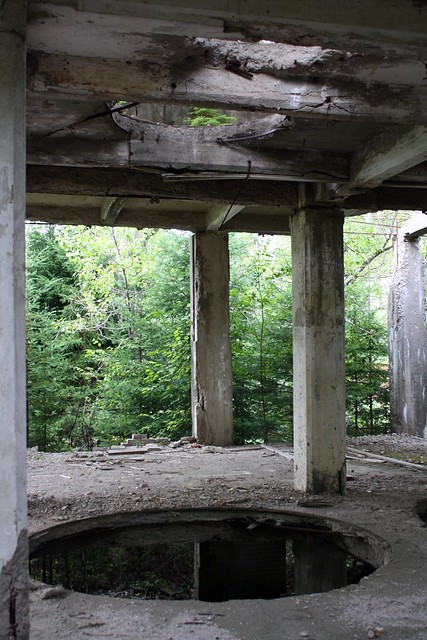
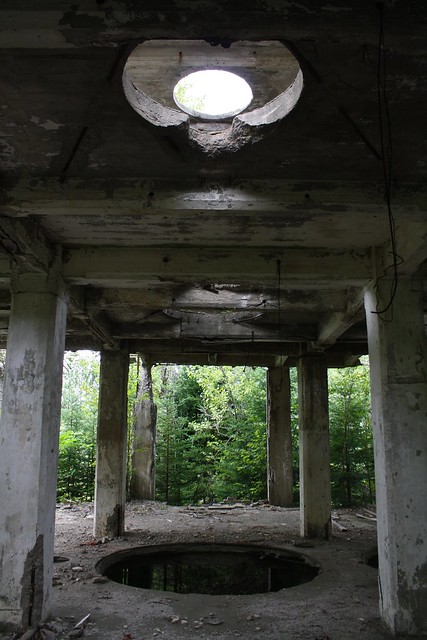
The concrete structures are merely shells of there former selves, skeletal remains. The secondary growth deciduous coniferous forest of Donald is reclaiming the old ruins. Emerging plants are sprouting from cracks and crevices in the ceiling of the collapsing tunnels under my feet, and also cling to the ledges overhead. Several evergreens now call the ruins home, living on the brief flashes of sunlight that strobe through a few holes in the high ceiling above for only a few moments each day. Looking up, the state of collapse is suddenly alarming. Beneath my feet, I traverse massive piles of concrete that once made up the ceiling above. Large chunks of concrete also hang from rusted re-bar overhead. Its like some sort of god hit pause midway through a collapse, and at any moment that collapse could resume. And here I stand. The shell of this first building is several stories high, but there is no way up to be found. I leap side to side above the collapsing tunnels, all the way to the end of the structure, before venturing down into them. The concrete shell remnants of the upper floors tower overhead like god's private balconies.
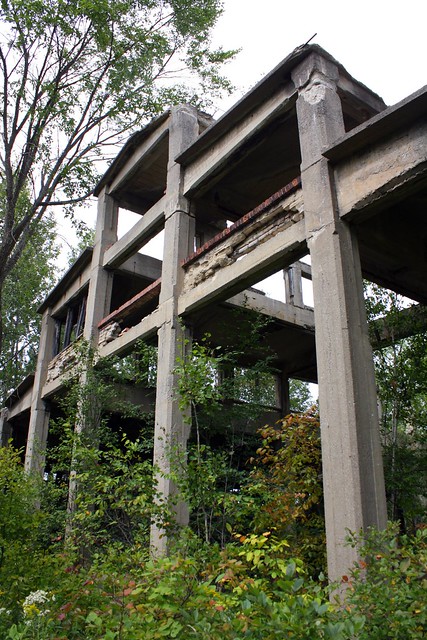
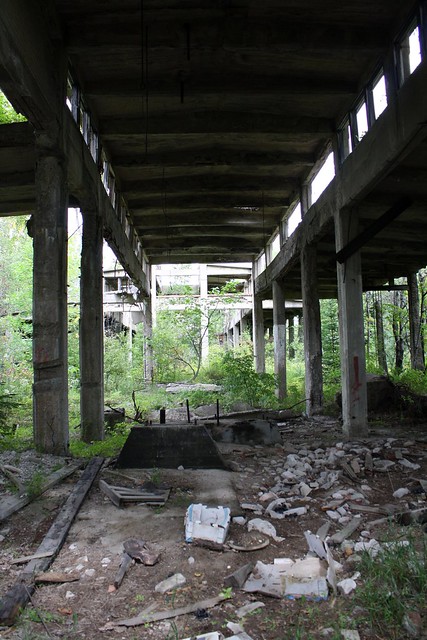
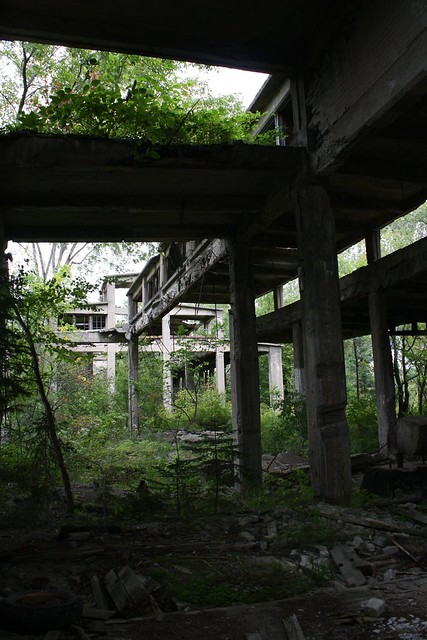
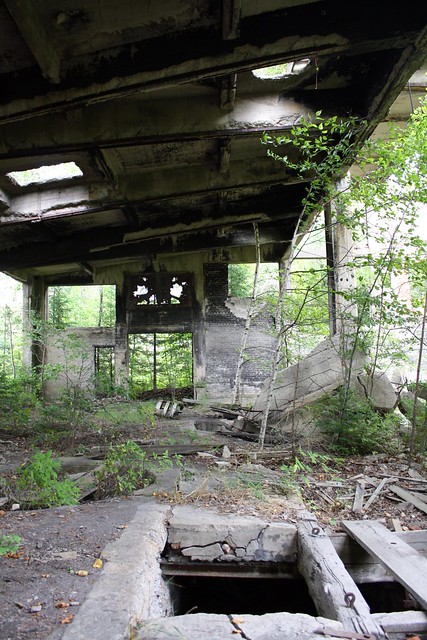
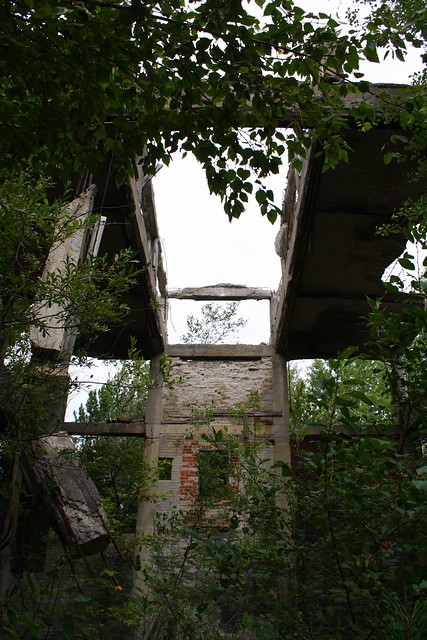
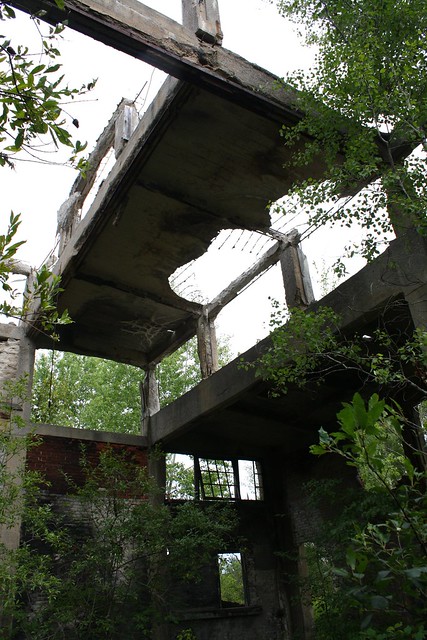

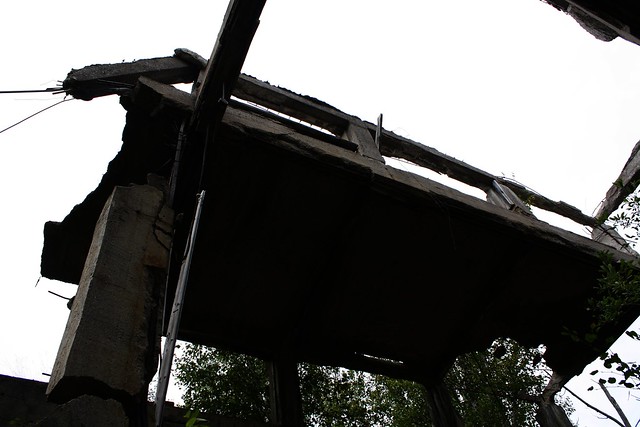
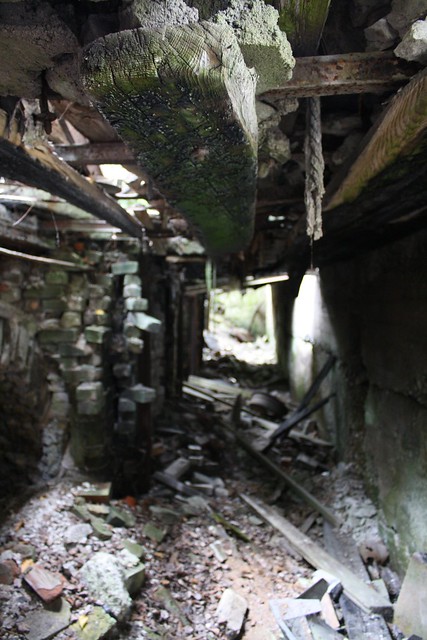
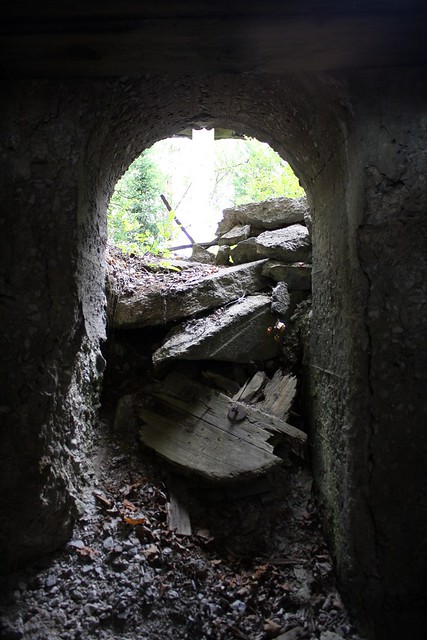
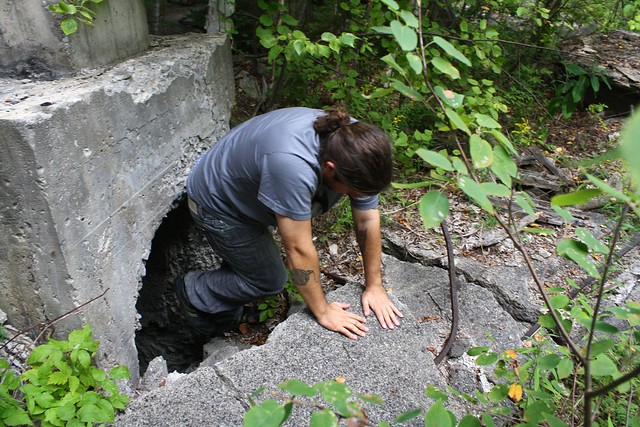
As I enter the tunnels, I am all too well aware of the inherent dangers. The tunnel is in a severe state of collapse. Large wooden beams are crumbling under the weight of the concrete, and have crashed to the tunnel floor every few feet. Much of the tunnels ceiling is still somewhat intact, hanging precariously in a V shape just above my head. My fear is palpable, but against my better judgement, I carry on tentatively, and make it from end to end.
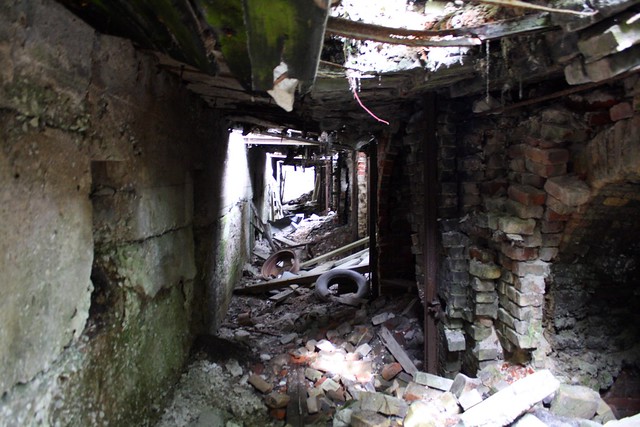
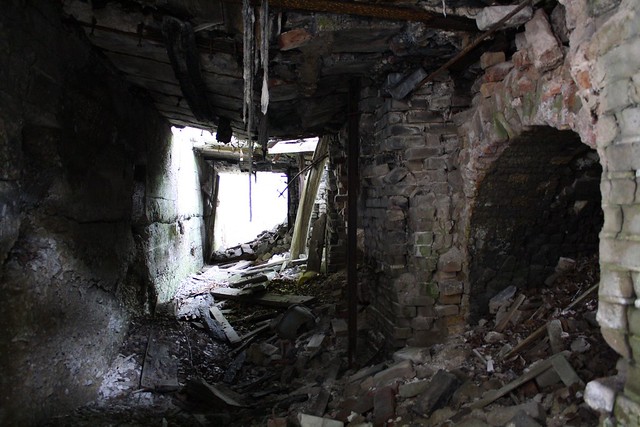
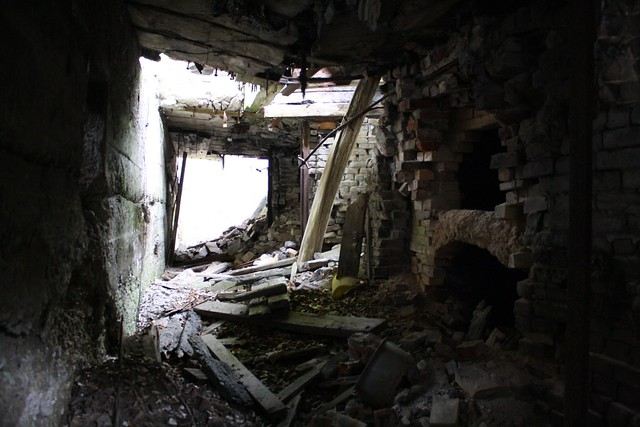
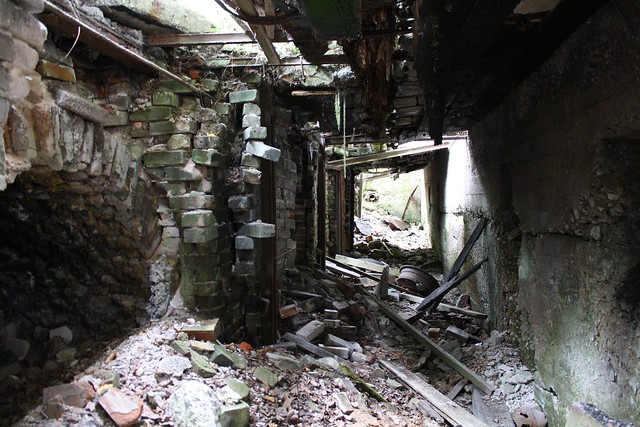
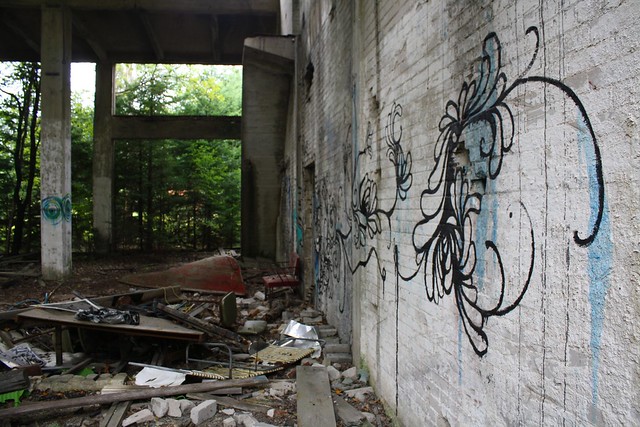
Before leaving this first building, we stop again at the beautiful piece of graffiti that first welcomed us inside. It is a fantastic free flowing floral filigree design that accentuates and pays tribute to the reclamation of nature that is already at work in the space.
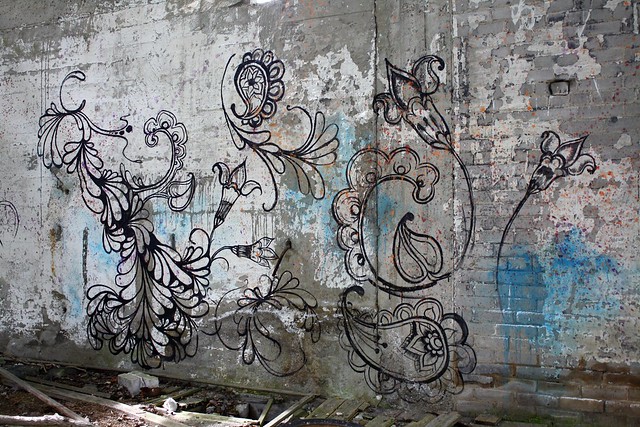
The design fluently flows further out into the building, decorating one of the concrete chunks that hangs dangerously from the ruins above. In my humble opinion, this particular graffiti is not the result of an act of vandalism, it is a gift. It is something raw and pure, a connection between man and his environment, leaving a visual dialogue that tells a story of understanding and acceptance of the forces at work. It is a gift from an artist, to the space itself, and to the people like me that venture into these forgotten spaces.
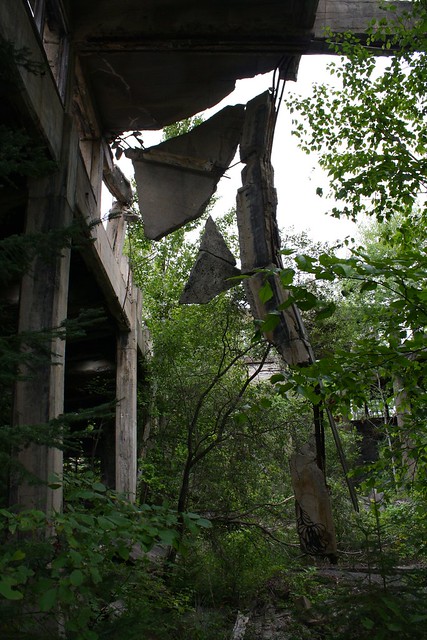
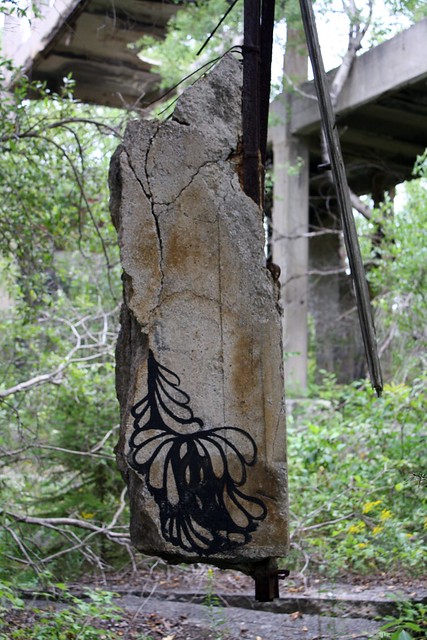
Outside again, the purple ball makes another appearance. It seemingly followed us onto the property, ignoring the NO TRESPASSING signs with the same utter disregard as us. This time, I kick it, and it flies through the air, into the thick brush. Ninja exclaims, "He shoots, he scores."
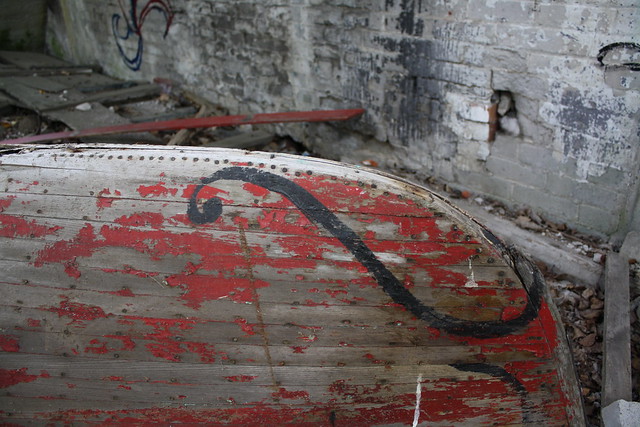
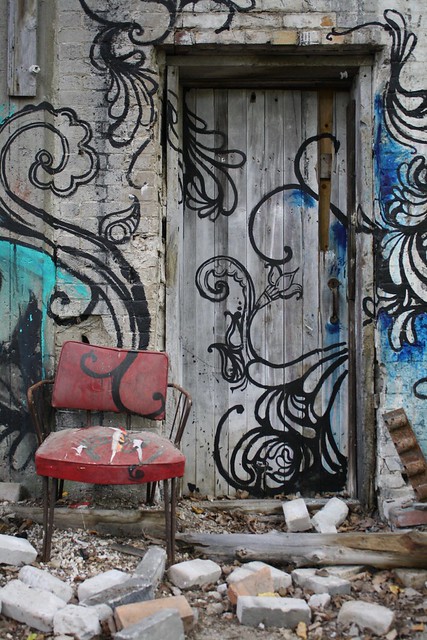
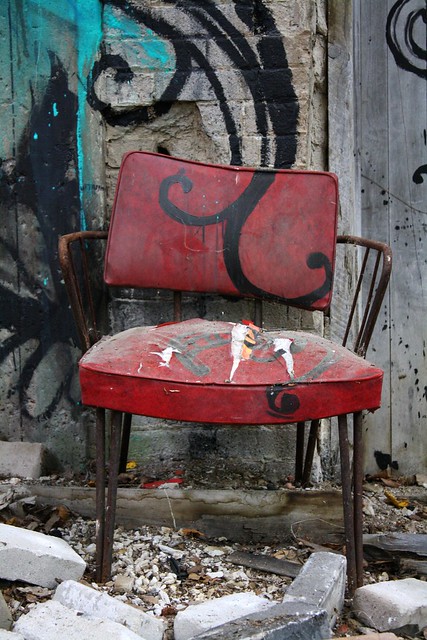
This next building welcomes us in the same manner as the last, the floral filigree graffiti seemingly sprouting from a wooden door and growing like vines across the wall. A rotting red canoe carcass and a red leather chair have been incorporated into the mural, further mimicking the role of nature in the space, and telling a story that is very much capturing the here and now of the Standard Chemical Ruins.
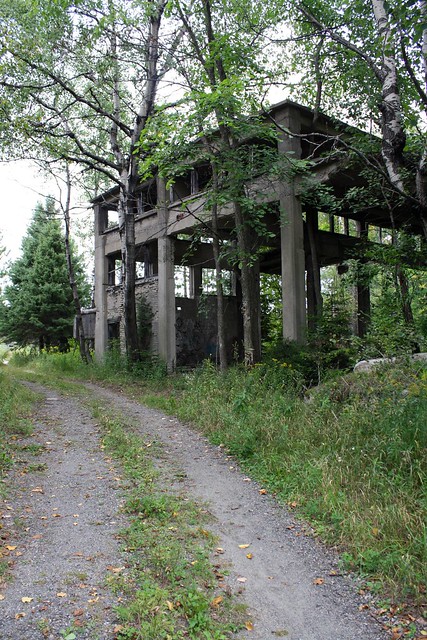
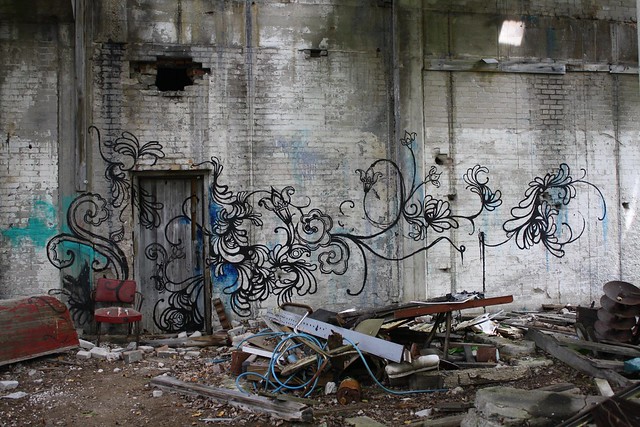
A tall slender staircase with no railings rises above the mural, and from atop it, I snap photos outside, back at that first building, and then down into the shell of this second building.
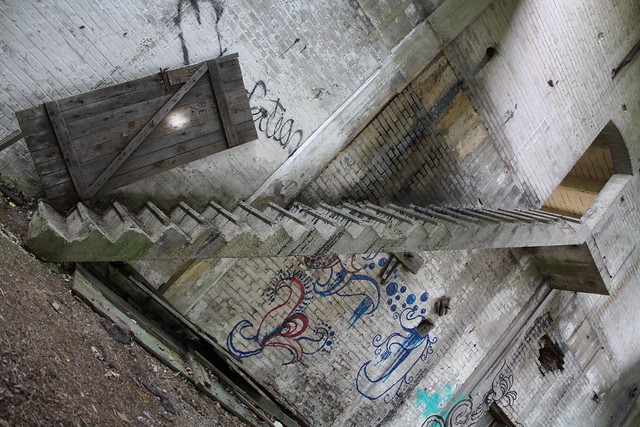
Deeper into this building, I cannot reach the top portion of a concrete staircase that hangs from the second floor, so I climb up the hard way. Seconds later, my girlfriend Ninja's voice echoes from below, "Staircase...staircase...staircase!"
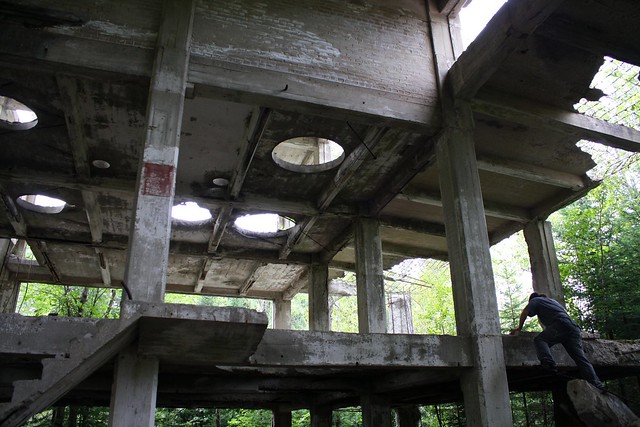
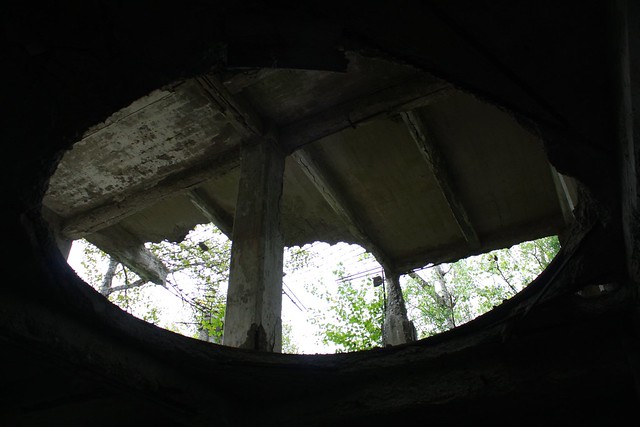

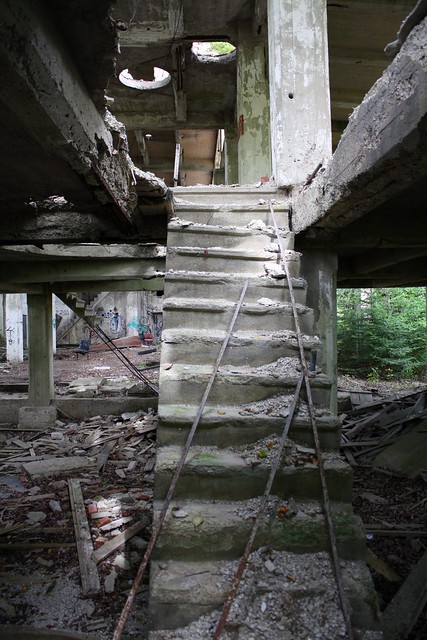
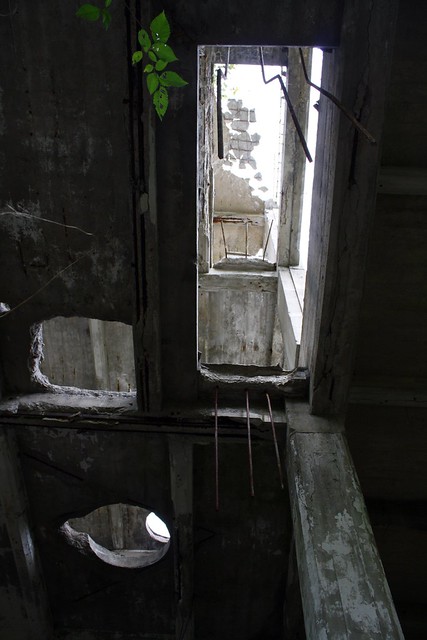
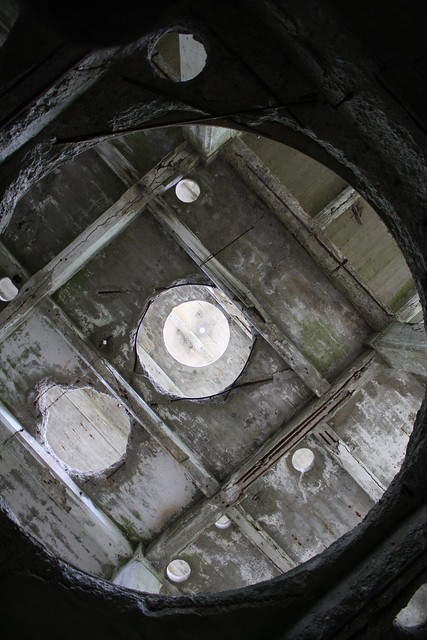
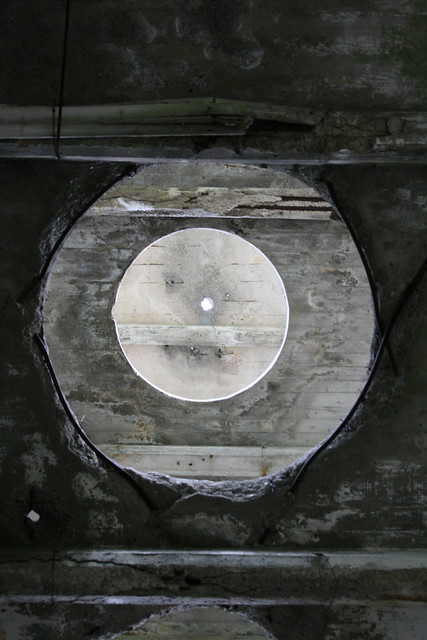
There are at least 4 or 5 floors above me here, a single fern clings to the raw concrete several stories up. Circular patterns of varying sizes are everywhere: voids in the bare concrete. The circles get smaller in each floor above, until the top floor, where the circles are as small as a hole on the green of the abandoned White's Mini Golf in Wasaga Beach. Massive iron furnaces once stood here, several stories high. The process of removing these furnaces in 1946 and selling them for scrap would explain the removal of the outer walls, I ponder aloud. "Pardon...pardon...pardon?" echoes from below, travelling through the circles. Ninja finally ascends the staircase and joins me, sitting on the edge of the giant circle, our legs dangling.
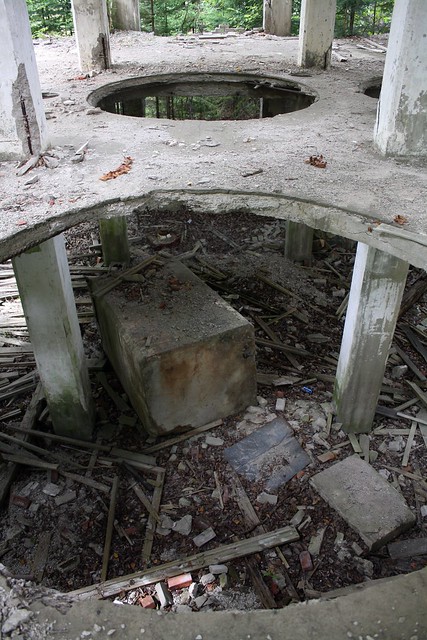
After wandering deeper onto the property and crossing the river, past the tiny waterfall, we find an occupied residence and quickly retrace our steps back off of the property. We circle the building across the road, which first caught our attention, and clearly belongs to the old Standard Chemical Ruins, but it is sealed tight. This building has clearly seen very recent renovations.
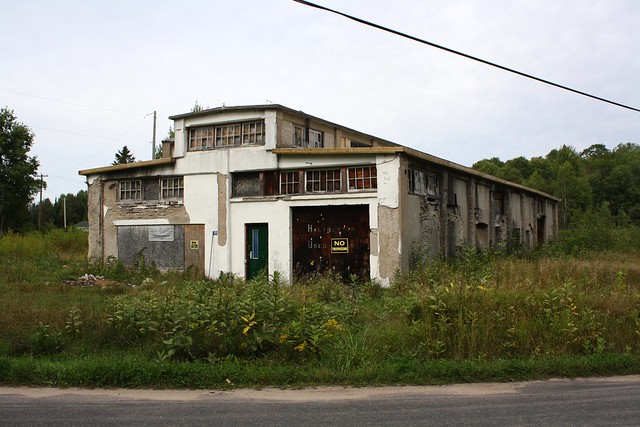
Adjacent to this building, on the other side of the old Victoria Railway, which is now a 90 kilometre cyclists trail from Lindsay to Haliburton, rests The Little Tart, the best bakery we've ever found within a 20 second walk from an abandonment. With delicious lemon squares and butter tarts in our hands and mouths, we conversed with the baker. He stated that the sealed building under renovations has been saved by dedicated locals and is currently being restored as a centre for small contractors and green building suppliers to market their services. A great effort has been made to save this building, and the history that it represents, he tells us. An iphone internet search corroborates his claims, as we exit The Little Tart, only to be passed by once again by the bouncing purple ball.
This exploration was prefaced by the discovery of the long abandoned Gelert Anglican Church to the south, and followed up with the exploration of the Haliburton School of The Arts to the north.
click here to check out all of jerm & ninja IX's ABANDONMENT ISSUES



7 comments:
Thanks so much for your photos, explorations and writings. I spent a considerable amount of time playing in the ruins of the chemical factory as a child, teen and adult. It was always a mysterious and strangely magical place for me because I could see and feel the way the land around the factory was reclaiming space...changed, altered but a reclaimation none the less. I also spent a lot of time wondering about the lives of the folks who lived in Donald and worked in the factory. I'm also so thrilled about the art work you found!!! Beautifully documented! Thank you very much!
Thank you so much. Possibly the most significant abandoned building in my life. I painted those murals. So happy that you stumbled across them. And so happy I stumbled across this. I also painted in the abandoned art school. This was such a delight to read and see the amazing photos. Thank you!
So glad you commented Suzie. I would love to discuss your beautiful artwork further. Please email me at jerm9ine@gmail.com
Wow what an interesting story I glad i came across this web page, about 4 years ago I came across a lighter at a garage sale, an old zippo lighter and it said on it STANDARD CHEMICAL, something about this lighter intrigued me , always wondered about its origin. I just want to say that the pictures are amazing, you really captured the mood and energy of this place. Its about a 3 hour drive there, i would like to go there someday.
Regards Peter petermargaret1@hotmail.com
Thanks for the interesting pictures. My grandfather worked at this plant and lived close by (near the old mini put/country store).
Thanks for the comments, I really love when those personal connections are made.
Great article and great photography! I came upon this piece in a search for information about the place where my Mother grew up. My Grandfather and Great-Grandfather worked for Standard Chemical. Thanks for sharing!
Post a Comment